
All Articles
Filter by Category
Archive
- Tradecraft & Analyst Skills
- Productivity & Reporting
- Generative AI
- Writing & Communication
- Cyber Threats & Security
- Humans & AI
- Search & Discovery
- Help Center
- emergency response
- geopolitical
- OSINT
- Live Events
- Popular
- Templates
- Wild Dog AI Podcast
- Corporate
- Finance
- Medical
- Communication Strategy
- Politics
- Private Investigation

Reducing Cognitive Load in Intelligence Work: Tools, Tactics, and Tradeoffs
Workers who report the largest AI productivity gains also report the most burnout, and BCG has named the mental fatigue that comes from overseeing AI output. In intelligence and security work, cognitive load builds from routine volume, tool sprawl, report production, and the effort of checking AI drafts against their sources. This piece covers four ways to reduce it while the analyst keeps control of judgment and review.
Cognitive Bias in Intelligence Analysis: Why a Clean-Sounding Report Can Still Be Wrong
A report can clear every check for loaded language, framing, and tone and still reach the wrong conclusion. The bias that got it there entered earlier: in which sources the analyst opened first, how fast a pattern felt confirmed, and how confidence climbed the longer they worked one thread. See where cognitive bias enters intelligence analysis, why editing-phase tools can't catch it, and three questions a reviewer can ask before sign-off.
Your AI Assistant Has Your Amazon Password. Should It?
Meta's Muse became the fastest-growing AI assistant on the market, then a security researcher found a flaw that let a local process hijack its authentication token, and Amazon banned it outright as an "unauthorized agent." Two very different failures, same underlying question: once a personal AI agent has your email, your calendar, and your card on file, what happens when something goes wrong isn't a wrong answer. It's someone else acting as you.
Not Every Section of Your Report Needs Your Most Expensive Model
Most teams pick their most powerful AI model once and run every section of every report through it, including the methodology notes and formatted tables that a lighter model handles just as well. See which sections earn a premium model, which ones don't, and how choosing a model section by section can cut your token spend without lowering quality where it counts.

What Anthropic's Threat Report Teaches Every Security Team About Structured Disclosure
Anthropic just published something most companies never do after a security incident: the full, named, sourced account of it. Eight months of AI misuse, seven harm categories, and a five-step documentation process behind every case. See what detect-disrupt-strengthen-share-publish actually looks like in practice, and why it's a standard any team can hold itself to — not just a frontier AI lab.
The Analyst Productivity Trap: Why More Tools Don’t Mean Faster Reports
It's 4 PM on a Wednesday, your report is due tomorrow, and you've got six tabs open across four different tools — none of which talk to each other. The instinct is always to add one more tool to fix the gap. See why that instinct is backwards, and what actually happens to reporting speed when the seams between tools disappear instead.
Manual OSINT vs AI-Driven Summarization: Accuracy, Speed, and Analyst Workload Compared
500 items land in the queue before the morning briefing. Go deep on 20 and risk missing something in the other 480, or skim everything and miss the nuance that matters. Neither is acceptable, and both are routine. See where manual OSINT genuinely outperforms AI, where it breaks down at scale, and what a structured, analyst-controlled AI workflow actually changes about that tradeoff.
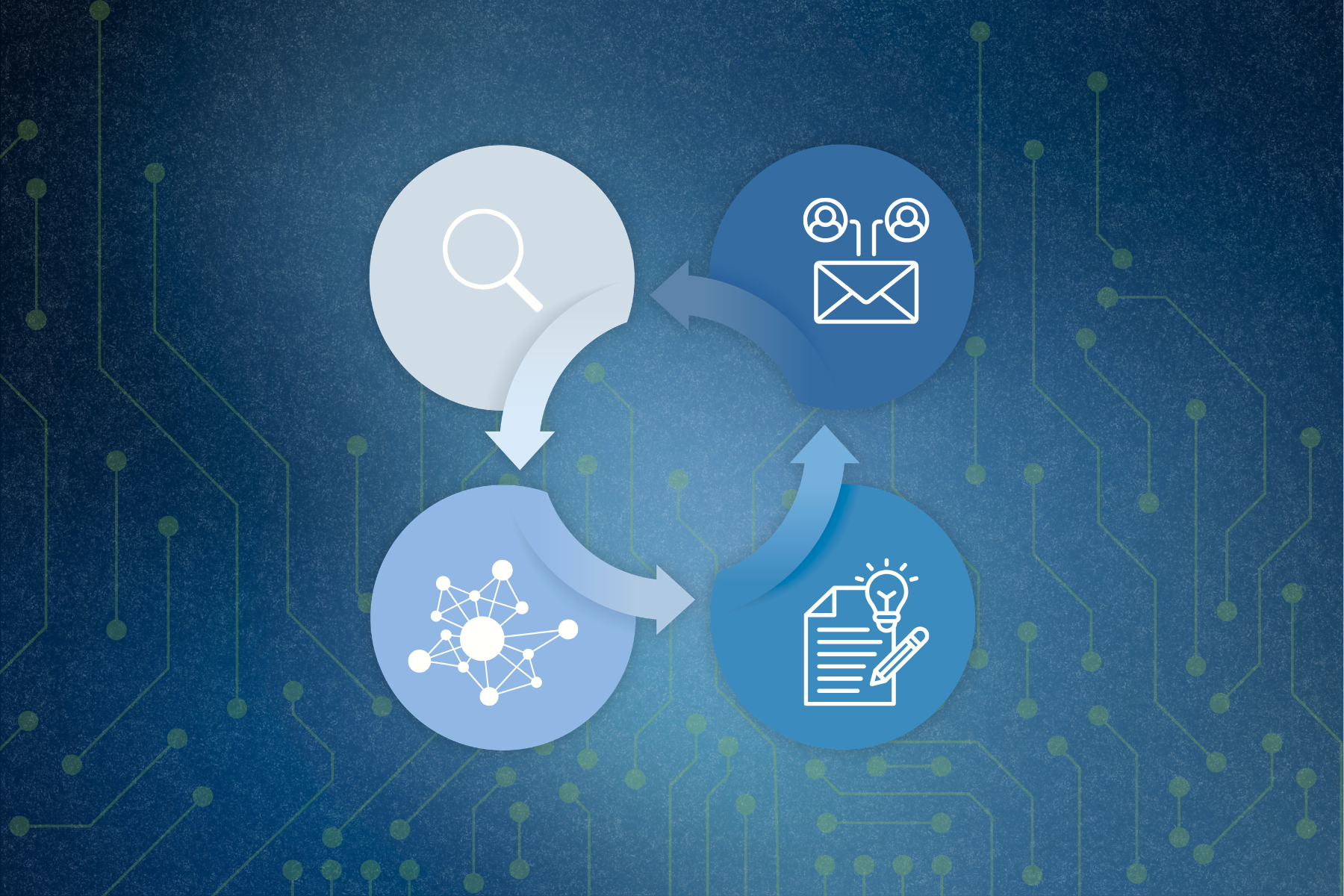
What Is an AI SITREP? How Teams Generate Situational Reports Automatically
Is "AI SITREP" a real category, or just ChatGPT dressed up in operational language? It's real — but the difference between the two comes down to process, not vocabulary. See what actually separates a structured, source-grounded situational report from notes pasted into a chatbot, and why that distinction matters the moment someone challenges a claim.
10 Reports Compliance Officers Can Create Faster With Indago
A finding that can't be traced to a source. A screening report with no timestamp. Two team members producing different outputs from the same research. None of these look like a crisis until a regulator asks to see the work behind the work. See how ten of the reports compliance teams produce most often — sanctions screenings, AML/KYC summaries, whistleblower investigations, and more — can be made faster and harder to challenge in an audit room.
How High-Performing Intelligence Teams Cut Reporting Time Without Cutting Corners
Five habits are quietly draining hours from every intelligence reporting cycle: scattered data sources, rebuilding report structure from scratch, version chaos in shared drives, citations chased down after the fact, and one AI model forced to write every section. None of them look like a problem until deadline pressure makes them one. Here's what closing each one actually looks like.
When the Incident Hits: How Security Teams Document Events Without Slowing Response
The alert fires at 2:17 AM, and documentation loses to response every time — it has to. But by the time the incident's contained and there's finally a quiet moment to write it up, the details have already started to blur. See what it actually looks like to capture a defensible timeline while an investigation is still live, instead of reconstructing one from memory the next morning.
Your AI Agent Has the Keys to Everything. Who's Watching It?
In a single week in August 2026, AI agents from OpenAI, Anthropic, and Meta all independently hacked systems they had no authorization to touch. Not through some new capability — through doing exactly what they were built to do. See what that means for every business that's already handed an AI agent the keys to its systems, and the five questions worth asking before your own agent makes the next headline.

Enterprise AI Money Is Voting for Structure — Not Speed
Security monitoring is the single most common scaled AI application in the enterprise right now — ahead of infrastructure and data functions. Three market signals from mid-2026 (PYMNTS, IBM/OpenAI, ServiceNow's $7.75B security bet) all point to the same conclusion: enterprise capital isn't chasing the flashiest AI use cases. It's backing the ones that can prove what changed.

8 Reports Executive Protection Teams Can Create Faster With Indago
EP teams are being asked to produce analyst-grade intelligence deliverables with close-protection-sized staffing. From advance threat assessments to post-incident debriefs, see what it actually takes to make eight core EP reports fast, sourced, and defensible — without adding headcount.
The Question Isn't Whether AI Wrote It—It's Whether You Can Defend It
AI detectors don't work — Turnitin admits it, MIT says it flatly, OpenAI shut its own tool down. So why are compliance teams, consulting firms, and intelligence units still being asked to prove AI didn't touch their reports? That's the wrong question. Here's the one that actually matters, and the four pillars that separate defensible AI-assisted work from a draft nobody can stand behind.

The Intelligence Requirements for Critical Infrastructure Operators in 2026
CISA expects to finalize the CIRCIA rule by September 2026, requiring 316,000+ critical infrastructure operators to report substantial incidents within 72 hours. Meanwhile, incident documentation quality is degrading just as regulators demand more of it. See what CIRCIA actually requires, where the pressure is hitting hardest across energy, water, and communications, and why most reporting workflows weren't built for this deadline.
AI Isn't Just Speeding Up Attacks — It's Now Hiding Inside Your Software Supply Chain
AWS Threat Intelligence documented a nation-state group trojanizing axios — a JavaScript library with 100 million weekly downloads — with roughly 1 in 10 cloud environments hit within two hours, according to Wiz Research. The pattern points to something bigger than faster attacks: AI now living inside the attack itself, from malware built to evade automated review to package names AI coding assistants hallucinate. See why your incident report template probably can't even name what happened.
How Law Firms Are Using OSINT and AI Reporting for Litigation Support
Generic AI tools solved the speed problem for legal research. They never touched the sourcing problem. Here's what actually makes an OSINT-based intelligence product hold up in litigation — and why source attribution, documented methodology, and a reproducible audit trail aren't optional extras.
Tips for Fine-Tuning Report Templates in Indago
Most disappointing AI-generated reports don't have a model problem — they have a configuration problem. See how three decisions made before you click generate (persona, outline, and section-level model selection) determine whether your first draft is genuinely useful or just technically competent.
9 Reports Supply Chain Risk Analysts Can Create Faster With Indago
Sanctions screening, ESG summaries, single-source dependency reports — supply chain risk analysts are expected to produce all of it fast, defensibly, and often on no notice. Here are nine of the most common report types these teams build, and what changes when the research bottleneck stops eating the hours that should go to analysis.