
All Articles
Filter by Category
Archive
- Tradecraft & Analyst Skills
- Productivity & Reporting
- Generative AI
- Writing & Communication
- Cyber Threats & Security
- Humans & AI
- Search & Discovery
- Help Center
- emergency response
- geopolitical
- Live Events
- OSINT
- Popular
- Templates
- Wild Dog AI Podcast
- Corporate
- Finance
- Medical
- Communication Strategy
- Politics
- Private Investigation
The 4:45 PM Tasker: How Analysts Use GenAI When Leadership Needs Answers Before COB
At 4:47 PM, Mira gets a Slack message: leadership needs a geopolitical intelligence brief on the South Caucasus, presentation-ready, by close of business. This post walks through exactly how she builds it — from scoping the intelligence question to curating a source collection, generating a structured first draft, and delivering a fully cited, defensible product in under two hours.
What Happens When Your Intelligence Tool Goes Down During an Active Incident
At 2:31 AM, the intelligence platform goes offline. The analyst still has raw telemetry and endpoint logs — but the analytical layer tying it all together is gone. This post walks through what platform failure actually costs during an active incident, what mission-critical continuity requires from any AI intelligence tool, and the six questions every procurement team should be asking before they sign a contract.
AI SITREPs for SOC Teams, Fusion Centers, and Security Operations
A SITREP is only useful if it arrives before the window for action closes — and producing one manually under time pressure has always been the hardest part. This post breaks down how AI-assisted reporting changes the production workflow for three distinct security environments: SOC teams managing active incidents, fusion centers reconciling multi-agency source streams, and enterprise security operations maintaining consistency at scale.
When AI Becomes the Source: Why Analysts Matter More Than Ever
The CNN vs. Perplexity lawsuit is about copyright on the surface. Underneath, it points to something more consequential: a growing number of professionals are consuming information through AI summaries rather than original sources. This post examines what gets lost in that compression — nuance, caveats, uncertainty, competing perspectives — and why analyst judgment has never been more important than it is right now.
The Watchfloor Approach to Brand Intelligence
Most organizations treat reputation management as a communications function: monitor casually, react when something breaks, issue a statement, move on. But in a threat environment where a coordinated disinformation campaign can generate press coverage before the morning standup is over, that posture isn't enough. This post applies the operational logic of an intelligence watchfloor — continuous monitoring, structured assessment, rapid escalation — to brand risk, and walks through a four-stage intelligence cycle that turns reputation management from a reactive cleanup exercise into a proactive discipline.
Why Section-Level Regeneration Produces Better AI Reports
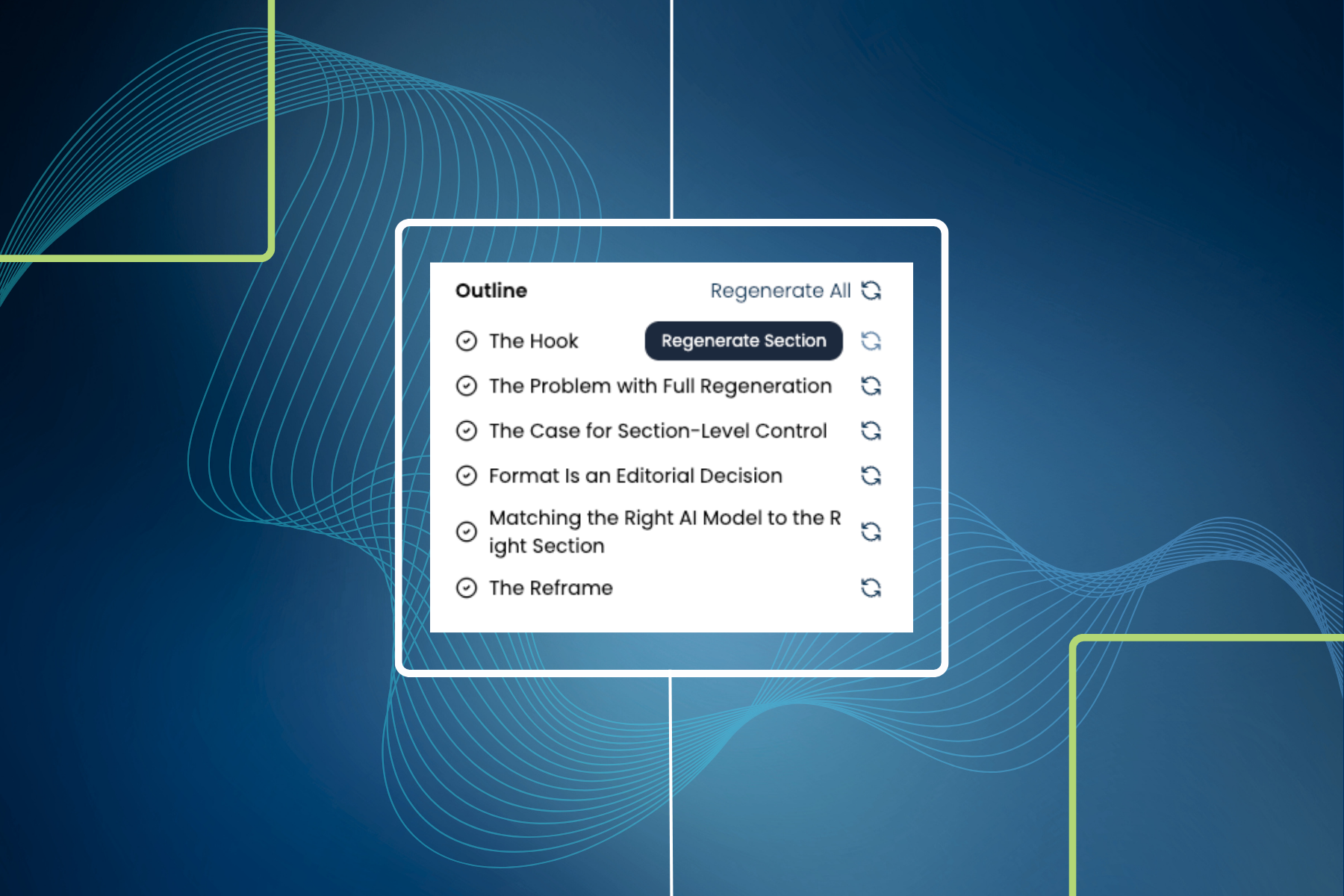
Most analysts have been there: one weak section in an otherwise solid report, and the temptation to hit regenerate and start fresh. The problem is that full regeneration treats every section as equally flawed — wiping out verified work to fix one paragraph. This post breaks down why section-level control produces better reports, how targeted instructions outperform global rewrites, and how matching the right AI model to the right section changes the quality of the final product.
Brand Intelligence Isn't Just for Marketing Anymore
Brand risk isn't a marketing problem anymore. A deepfake, a data breach, or a coordinated disinformation campaign can trigger consequences across security, legal, investor relations, and HR simultaneously. Here's why cross-functional brand intelligence is now a mission-critical input — and what it looks like when it works.

What Happens When You Run Intelligence Reporting Through ChatGPT Instead of a Controlled Platform
General-purpose LLMs like ChatGPT are fast, accessible, and genuinely useful for early-stage research. They are also structurally unreliable for professional intelligence reporting — generating confident-sounding text that may have no grounding in a verifiable source, with no citation trail, no audit record, and no way to reproduce the output six months later when someone asks where it came from. This piece examines three dimensions where the two approaches diverge most sharply: hallucination risk, source attribution, and audit trail — and offers a clear framework for deciding which tool belongs where in a professional intelligence workflow.

How to Use Indago's Co-Pilot to Search Smarter and Draft Faster
Co-Pilot is one of Indago's most versatile features — and one of the most underutilized. This guide covers what Co-Pilot actually is, what it isn't, and how to use it effectively across three stages of the reporting workflow: searching, drafting, and editing. Whether you're translating a natural language query into a structured search, building a template from scratch, or stress-testing a draft section against your source collection, Co-Pilot is most powerful when the analyst stays in control and directs it with clear intent.
Why Intelligence Analysts Are Moving Away from Word Documents for Report Writing
Word was built for document creation — not intelligence reporting. The copy-paste sourcing workflow breaks attribution trails. Version proliferation creates invisible coordination failures. Formatting overhead eats analyst time that should go toward analysis. And when a report is finalized, the reasoning behind it disappears with the analyst who wrote it. This piece breaks down the four structural failure points of the Word-based reporting workflow and what a purpose-built alternative actually looks like.

Breaking News, No Context: How Intelligence Teams Handle Fast-Moving Events Without Guessing
When a breaking physical security event hits, the information environment doesn't get clearer as more data arrives — it gets noisier. Rumor, speculation, and verified reporting arrive in the same feeds at the same speed, and the pressure to produce something fast is exactly when the worst intelligence mistakes get made. This piece follows Leo, a crisis intelligence analyst, through the four-stage workflow that separates defensible analysis from educated guessing: triaging before typing, building an attributed collection under pressure, generating a confidence-calibrated first draft, and reviewing with the skepticism the moment demands.
Intelligence Report vs. Intelligence Brief: What's the Difference and When Do You Use Each?
Intelligence reports and executive briefs serve fundamentally different purposes, but many analysts default to one format out of habit rather than choosing based on what the situation actually requires. This guide defines both formats clearly, breaks down the key distinctions across audience, purpose, length, and structure, and gives analysts a four-question decision framework for choosing the right one every time. It also covers a workflow approach in Indago that lets you produce both formats simultaneously from the same source collection — no duplicate work required.
The Real ROI of Faster Intelligence Reports: It's Not Just Time Savings
When intelligence teams justify reporting tools, the argument almost always centers on hours saved. That metric is real — but it captures only the most visible layer of the value. This piece makes the fuller case: how report accuracy affects the quality of decisions made from it, how faster reports compress the window between an event and an organizational response, how consistent quality builds analyst credibility with leadership over time, and how reporting infrastructure that preserves institutional knowledge compounds in value with every cycle.
How to Build a Source Collection That Produces Better Reports
Most analysts troubleshoot inconsistent report quality by switching models or adjusting templates — but the variable is almost always the collection. This piece breaks down four principles for intentional collection-building in Indago: why source focus matters more than source volume, how to match your collection approach to your report type, how to use the token budget as a quality filter rather than a frustration, and how well-built collections compound in value over time as institutional assets.
How to Build Your First Intelligence Report in Indago: A Step-by-Step Walkthrough
Building your first intelligence report in Indago comes down to a series of clear, manageable decisions. This walkthrough shows exactly how to move from source selection to a structured, fully sourced draft, then refine it into a finished report. You’ll see how templates, models, and editing tools fit together in a real workflow. By the end, you’ll know what to do at every step.
How to Audit Your Current Reporting Workflow Before You Adopt Any New Tool
Most tool evaluations fail before they start — not because the software isn't capable, but because teams don't actually know where their current workflow is breaking down. Run this audit before your next vendor demo and you'll ask sharper questions, evaluate more honestly, and make a decision that actually sticks.
Onboarding a New Analyst? Here's How to Use Your Existing Report Archive as a Training Asset
When an experienced analyst leaves, they take more than their expertise — they take the reasoning, source logic, and analytical judgment that made their work credible. This piece breaks down how intelligence teams can use their existing report archive, templates, and source collections as a structured onboarding asset, so new analysts inherit a tested framework instead of starting from scratch. The result is faster ramp time, more consistent output, and institutional knowledge that compounds instead of walking out the door.
How Intelligence Teams Evaluate AI Reporting Tools: A Buyer's Checklist
This guide breaks down how to evaluate AI reporting tools across accuracy, security, workflow, and governance. It highlights the questions that actually matter in high-stakes environments, from hallucination risk to data handling policies. If you’re considering an AI tool, this is the checklist to bring into every vendor conversation.
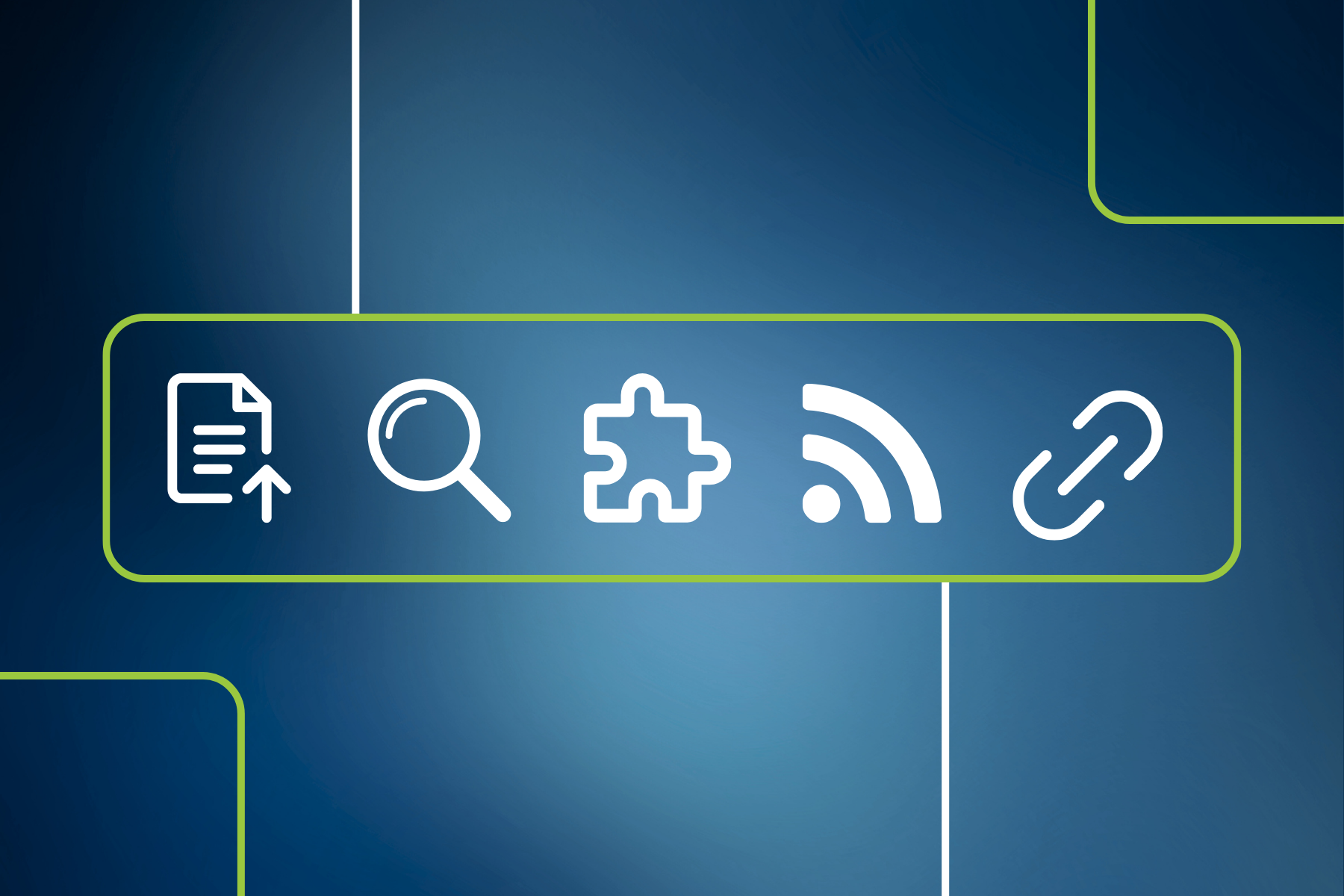
5 Ways to Build Data Collections in Indago
In Indago, the AI only works on what's inside your collection — it never browses the open internet or pulls in unreviewed sources. That makes collection-building one of the most important skills an analyst can develop on the platform. This guide walks through all five methods for bringing data into Indago: file upload, built-in search, the Data Retriever Chrome extension, RSS feeds, and API integrations — with practical guidance on when and why to use each one.
From Planning to After-Action: The Full Reporting Lifecycle of Major Events
Event security reporting doesn't begin when the gates open — it starts weeks earlier with threat assessments and venue profiling, and it doesn't end until the after-action review is filed. This piece follows Celeste, a hypothetical senior event security analyst preparing for a 200,000-person music festival, through all four stages of the reporting lifecycle: pre-event threat assessment, operational daily SITREPs, real-time incident reports, and post-event after-action review.