
All Articles
Filter by Category
Archive
- Tradecraft & Analyst Skills
- Productivity & Reporting
- Writing & Communication
- Generative AI
- Cyber Threats & Security
- Humans & AI
- Search & Discovery
- Help Center
- emergency response
- geopolitical
- Live Events
- Popular
- Wild Dog AI Podcast
- Finance
- Medical
- Communication Strategy
- OSINT
- Politics
- Private Investigation
- Templates
How to Build a Source Collection That Produces Better Reports
Most analysts troubleshoot inconsistent report quality by switching models or adjusting templates — but the variable is almost always the collection. This piece breaks down four principles for intentional collection-building in Indago: why source focus matters more than source volume, how to match your collection approach to your report type, how to use the token budget as a quality filter rather than a frustration, and how well-built collections compound in value over time as institutional assets.
How to Build Your First Intelligence Report in Indago: A Step-by-Step Walkthrough
Building your first intelligence report in Indago comes down to a series of clear, manageable decisions. This walkthrough shows exactly how to move from source selection to a structured, fully sourced draft, then refine it into a finished report. You’ll see how templates, models, and editing tools fit together in a real workflow. By the end, you’ll know what to do at every step.
How to Audit Your Current Reporting Workflow Before You Adopt Any New Tool
Most tool evaluations fail before they start — not because the software isn't capable, but because teams don't actually know where their current workflow is breaking down. Run this audit before your next vendor demo and you'll ask sharper questions, evaluate more honestly, and make a decision that actually sticks.
Onboarding a New Analyst? Here's How to Use Your Existing Report Archive as a Training Asset
When an experienced analyst leaves, they take more than their expertise — they take the reasoning, source logic, and analytical judgment that made their work credible. This piece breaks down how intelligence teams can use their existing report archive, templates, and source collections as a structured onboarding asset, so new analysts inherit a tested framework instead of starting from scratch. The result is faster ramp time, more consistent output, and institutional knowledge that compounds instead of walking out the door.
How Intelligence Teams Evaluate AI Reporting Tools: A Buyer's Checklist
This guide breaks down how to evaluate AI reporting tools across accuracy, security, workflow, and governance. It highlights the questions that actually matter in high-stakes environments, from hallucination risk to data handling policies. If you’re considering an AI tool, this is the checklist to bring into every vendor conversation.
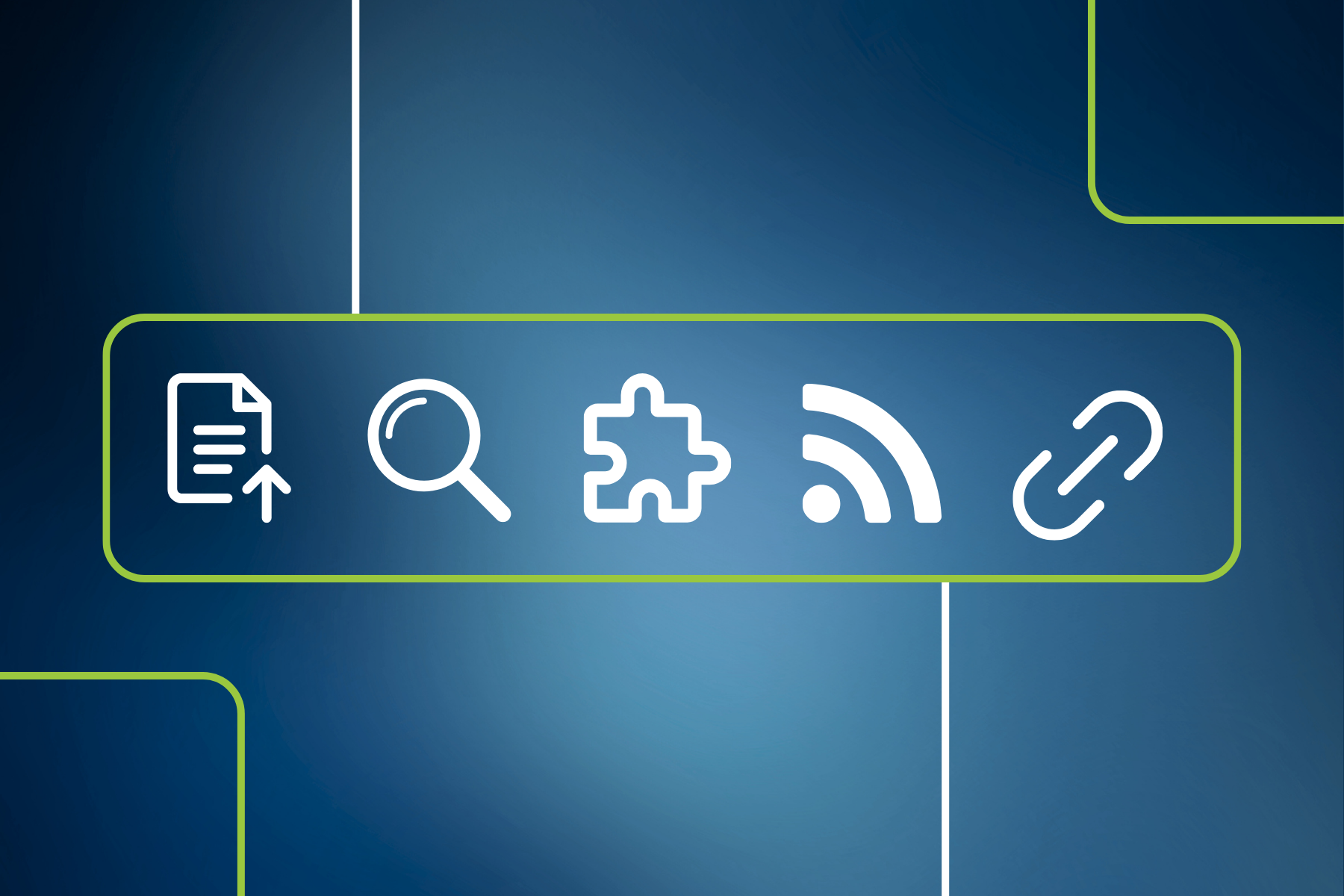
5 Ways to Build Data Collections in Indago
In Indago, the AI only works on what's inside your collection — it never browses the open internet or pulls in unreviewed sources. That makes collection-building one of the most important skills an analyst can develop on the platform. This guide walks through all five methods for bringing data into Indago: file upload, built-in search, the Data Retriever Chrome extension, RSS feeds, and API integrations — with practical guidance on when and why to use each one.
From Planning to After-Action: The Full Reporting Lifecycle of Major Events
Event security reporting doesn't begin when the gates open — it starts weeks earlier with threat assessments and venue profiling, and it doesn't end until the after-action review is filed. This piece follows Celeste, a hypothetical senior event security analyst preparing for a 200,000-person music festival, through all four stages of the reporting lifecycle: pre-event threat assessment, operational daily SITREPs, real-time incident reports, and post-event after-action review.
From Daily Updates to Strategic Insight: Scaling Public Health Reporting
Public health analysts don't produce one type of report — they produce six, often simultaneously, each serving a different audience with different urgency levels and different formatting requirements. This piece follows Darryl, a fictional public health intelligence analyst, through the six report types that define the role: from the daily grind of epidemiological SITREPs to the high-stakes pressure of early warning bulletins. For each one, we break down the specific workflow pressure it creates and what it looks like when structured templates handle the framework, so analysts can focus on the analysis.

The Digital Battlefield: Cyber and Physical Threats Converging at Major Events
When a cyberattack hits a major event, the consequences rarely stay contained to IT systems — they show up at the gates, in the crowd, and on the stadium floor within minutes. This piece follows Crystal, an event security analyst managing a major sporting event, through three scenarios where digital incidents cascade directly into physical emergencies: a ticketing system breach, a compromised venue app, and a coordinated deepfake and drone threat. Each scenario illustrates the same underlying problem: most event security teams are still running separate workflows for cyber and physical threats, which means when the two converge, nobody has the full picture.

From Hurricanes to Wildfires: Scaling Intelligence Across Any Incident
Emergency managers don't get to choose their incidents — one shift might start with a hurricane and end with a wildfire, and the reporting demands look completely different each time. Yet the expectation stays the same: accurate, sourced intelligence delivered faster than the crisis evolves.
This piece walks through three real-world incident scenarios and what it actually takes to keep reporting up to speed when the situation on the ground keeps changing.
3 Finance Intelligence Reports Watchfloor Analysts Can Deliver in Record Time Using Indago
Watchfloor analysts in finance and market intelligence face a pressure most roles don't: leadership needs answers before the market reacts, and the window between a breaking event and an executive briefing is often measured in minutes.
This piece walks through the three reports that define success in this role, the specific workflow challenges each one creates, how the best analysts are producing these accurately and under pressure — and what the right tooling actually makes possible.
Can AI Be Trusted for OSINT? Bias, Hallucinations, and Verification Methods Explained
AI hallucinations occur when language models generate information that sounds authoritative and well-sourced but has no basis in reality.
Indago’s built-in bias detection flags these patterns in generated text before they reach a finished report. It identifies patterns that suggest sentiment bias, confirmation bias, or selection bias, alerting analysts to sections that may require additional scrutiny.
Briefing the Boss: Turning Raw Findings into Executive-Ready Reports Without Rewriting Everything
Most analysts don't have a research problem… they have a last mile problem. The analysis gets done in hours; the reformatting to match a boss's specific preferences takes just as long.
This piece walks through five of the most common stakeholder quirks analysts deal with, and how to encode those preferences directly into your Indago report templates so every report starts from the right place instead of a blank page.
Geopolitical Risk Is Now an Enterprise Risk Problem
Across boardrooms from Fortune 500 companies to emerging enterprises, a new question is gaining traction: should we hire a Chief Geopolitical Officer?
The organizations that integrate geopolitical risk assessment into their existing enterprise risk frameworks today will emerge as the trusted advisors when the next crisis hits.
11 Reports Cyber Threat Intelligence (CTI) Analysts Can Create Faster & More Reliably with Indago
Cyber threat intelligence analysts produce a wide range of reports—from actor profiles and malware analysis to TTP deep dives and vulnerability exploitation briefings. This article explores 11 common CTI reports teams create and the workflows behind them. Learn how analysts can streamline the reporting process using Indago while maintaining full control over analysis and validation.

Multilingual OSINT in Practice: How Analysts Work Across Languages Without Translation Bottlenecks
Analysts across government agencies, private intelligence firms, and corporate security teams face a persistent operational challenge: critical intelligence signals frequently emerge first in local-language media, hours or even days before appearing in English-language outlets that dominate traditional OSINT workflows.
Modern OSINT investigations require analysts to monitor foreign media narratives, identify emerging regional dynamics, and validate information across multiple languages simultaneously.
Why Human-in-the-Loop AI Is Essential for Intelligence and Security Operations
As AI adoption accelerates across intelligence and security operations, many organizations measure success by how many humans they remove from the workflow. In high-stakes environments, that approach creates serious risk. Yet this framework fundamentally misunderstands productivity in intelligence environments, where the cost of error far exceeds the cost of human oversight.
Are AI-Generated SITREPs Reliable? Verification, Sources, and Human Oversight
AI-generated situation reports achieve reliability through systematic verification, not through AI sophistication alone. Organizations that implement structured oversight processes consistently produce trustworthy AI intelligence products.
AI-Driven OSINT Summarization: How Analysts Turn Open-Source Collection into Intelligence Deliverables
The most common misconception about AI-driven OSINT summarization is that it's about automating analysis. It's not. The real value lies in automating the mechanical work that prevents analysts from doing analysis in the first place. The future of OSINT is about machines doing the preparation so that humans can think better, faster, and with greater confidence in high-stakes environments.
7 Reports Private Investigators Can Create in Record Time Using Indago
The real bottleneck in private investigation is the hours spent organizing that evidence into defensible, professional reports—surprisingly, not investigation or surveillance. Indago is a structured reporting workflow platform designed specifically for investigators who need to transform raw evidence into professional, defensible reports quickly and consistently.